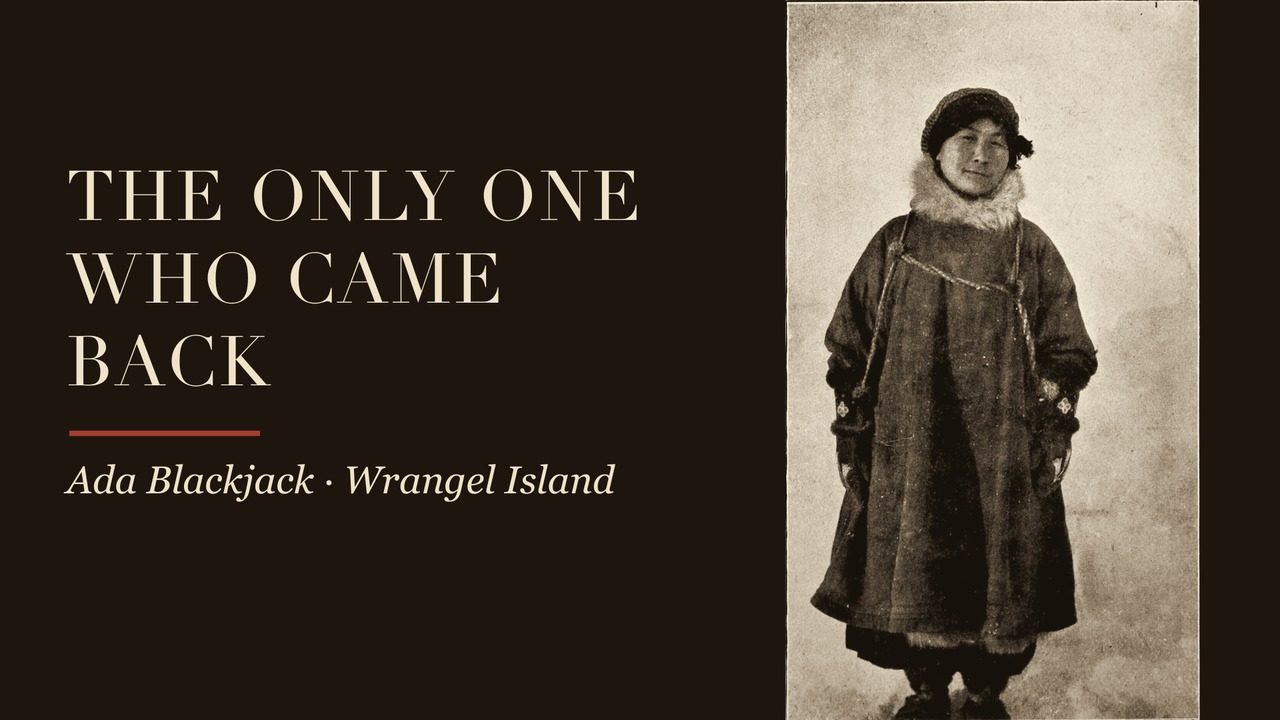
Ada Blackjack: The Seamstress Who Outlived the Explorers — Wrangel Island, 1921–23
Watch on YouTube Subscribe to Faded Pin
In 1921, four young explorers and one Iñupiaq seamstress were put ashore on Wrangel Island, north of Siberia, to claim it for the British Empire. The relief ship never came. Two years later, a ship finally reached the island — and found only Ada Blackjack, alive. She had come to sew clothes. She taught herself to trap, shoot and hunt, nursed a dying man, and kept herself alive alone on the ice.
▶ Full story, transcript and sources: https://fadedpin.vercel.app/stories/ada-blackjack-wrangel-island-survivor
På svenska
Ada Blackjack: Sömmerskan som överlevde upptäcktsresandena – Wrangelön 1921–23
År 1921 sattes fyra unga upptäcktsresande och en iñupiaq-sömmerska i land på Wrangelön, norr om Sibirien, för att göra anspråk på ön för Brittiska imperiet. Undsättningsfartyget kom aldrig. Två år senare nådde ett fartyg till slut ön – och hittade bara Ada Blackjack vid liv. Hon hade kommit för att sy kläder. Hon lärde sig själv att fånga rävar, skjuta och jaga, vårdade en döende man och höll sig vid liv ensam på isen.
Chapters
- 0:00The woman on the island
- 0:51Nome
- 1:56The offer
- 2:42Five people and a cat
- 3:25No ship
- 4:06Across the ice
- 4:59Alone with Knight
- 6:57June 1923
- 7:24Alone
- 8:53The rescue
- 9:33Heroine or not?
- 10:27Bennett
- 10:51Whose island?
- 11:24The rest of her life
The full story
In August nineteen twenty-three, a ship pushed through the ice towards a remote island in the Arctic Ocean, north of Siberia.
Two years earlier, five people had been left on this island. Four young men, and one woman. The plan was that they would claim the island, and be picked up after a year.
Nobody had picked them up.
When the crew came ashore, they found the woman. She was alone.
Her name was Ada Blackjack. She had come to the island to sew clothes. She was not a hunter. And she was the only one still alive.
Ada was born in eighteen ninety-eight, in a small settlement called Spruce Creek, in western Alaska. Her people were Iñupiat, the native people of Alaska's northwest coast.
When she was still a child, she was sent to a mission school in Nome, the gold-rush town on the Bering Sea. There she learned English, she read the Bible, and she learned to sew.
At sixteen, she married a man named Jack Blackjack, a hunter and dog-sled driver. The marriage was a disaster. He was violent, and in the end, he left her.
They had had children together. Only one, a little boy called Bennett, survived.
And Bennett was sick. He had tuberculosis.
Ada had no money for his treatment. She cleaned houses and took in sewing, but it was not enough. In the end, she had to place her son in a children's home in Nome, where he could at least be cared for.
She wanted him back. And for that, she needed money.
In nineteen twenty-one, an offer came.
A famous Arctic explorer, Vilhjalmur Stefansson, was planning an expedition. He wanted to send a small group to Wrangel Island, a large, empty island in the Arctic Ocean, off the coast of Siberia.
The island belonged to no one, as far as Stefansson was concerned. He wanted his team to live there, and claim it, for Canada or the British Empire.
He needed a seamstress, someone who could make and repair warm fur clothing, the kind you need to survive an Arctic winter. That was Ada's skill.
The pay would help her get Bennett back. She said yes.
The other four members of the team were young men.
The leader was Allan Crawford, a young Canadian. The other three, Lorne Knight, Fred Maurer and Milton Galle, were Americans.
And there was one more member of the expedition: a cat, called Vic.
Ada was the only woman. She was twenty-three. And unlike the men, she had not come for adventure. She had come for her son.
In September nineteen twenty-one, they were landed on Wrangel Island with their supplies. The ship sailed away, and they were on their own.
The plan was that a ship would come back the next summer with more food.
The first winter went reasonably well. The men hunted. Ada sewed. They were cold and isolated, but they were alive.
When summer came in nineteen twenty-two, they watched the sea, waiting for the ship.
A ship had been sent. It was a schooner called the Teddy Bear. But that year, the ice around Wrangel Island was too thick. The Teddy Bear got stuck, and could not get through.
No ship came.
The five of them faced a second winter on the island. And this time, the animals they hunted were growing harder to find. Their food was running out.
By the beginning of nineteen twenty-three, Lorne Knight was seriously ill. He had scurvy, a disease caused by a lack of vitamin C. It makes the body weak, the gums bleed, and old wounds open again. He could not travel.
The others made a decision. Three of them, Crawford, Galle and Maurer, would walk across the frozen sea to Siberia, and get help.
On the twenty-eighth of January, nineteen twenty-three, they set out across the ice.
Ada stayed behind, with Knight, who could not travel. And the cat.
The three men were never seen again.
To this day, nobody knows exactly what happened to them. They may have fallen through the ice. They may have been caught in a storm. No trace of them has ever been found.
Now Ada was alone with a dying man, on an island hundreds of kilometres from anyone who could help.
She had come to sew. Now she had to do everything else.
She took over the trap lines the men had set for Arctic foxes. She went out in the cold every day to check them.
She taught herself to shoot. At first she was clumsy and afraid. But she practised, and she got better.
She looked after Knight. She cooked for him, cleaned him, and kept the fire going. Day after day, she stayed with him.
In March, she began to keep a diary. It was written in simple English, about the small things of each day. The weather. The traps. What she shot. How Knight was feeling.
That diary still exists. It is kept today at Dartmouth College, in the United States. And it lets us hear her voice.
On the fourteenth of March, she counted her catch. The first fox I caught was on February the twenty-first, she wrote. Then the third of March, and the fourth, and the fifth. That makes four white foxes.
A week later: I caught one female fox, and I hauled one sled load, and chopped wood.
Looking after Knight was not easy. He was sick, in pain, and helpless, and sometimes he took it out on her. In April, she wrote that he had defended her violent ex-husband, and had told her, no wonder your children died.
She wrote it down. And she kept caring for him.
In May, she wrote: I fried one biscuit for Knight. That's all he has eaten for nine days. He doesn't look like he is going to live very long.
All through the spring, Knight grew weaker.
In June nineteen twenty-three, he died.
Later, Ada described those days in her own words.
I had hard time when he was dying. I never will forget that all my life. I try my best to save his life, but I can't quite save him.
Now there was no one left at all. Only Ada, the cat, and the island.
For about two months, she lived completely alone.
And she was afraid. From the very beginning, she had been terrified of polar bears. Now she had to face them alone.
On the sixth of June, she saw one far out on the ice, and watched it until it went away.
At the end of June, she saw a bear and its cub. I was very afraid, she wrote, so I took a shot over them. I shot five times, and they ran away.
On the twenty-seventh of June, she shot a seal. That's the first seal I ever got in my life, she wrote.
She hunted seals. She trapped foxes. She collected wood that had drifted onto the beach.
She even built herself a small boat, stretching skin over a frame, so that she could go out on the water when the ice broke up.
At the end of July, she wrote: I thank the living God, through Jesus, that has kept me alive till now.
Her grandson later remembered a saying she used for the rest of her life. In her English, it went like this:
If I alive, I keep going.
In August nineteen twenty-three, a ship finally reached Wrangel Island. It was called the Donaldson, and the man in charge of the rescue was Harold Noice.
The crew came ashore. They expected to find five people.
They found one.
Ada Blackjack had survived almost two years on Wrangel Island. She had been on her own, with no other human being, for about two months. And she had kept herself alive by doing things that, two years earlier, she had never done in her life.
She left the island with the cat, Vic.
When the news reached the outside world, it was a sensation.
Newspapers across America wrote about the young Iñupiaq woman who had outlived four explorers. Some called her a heroine.
But not everyone was kind to her.
A few months later, in February nineteen twenty-four, Harold Noice, the man who had rescued her, published an article. In it, he accused Ada of neglecting Knight, of letting him starve.
It was a terrible thing to say. And Ada's own diary told a different story: it showed how hard she had worked to keep him alive.
The people who defended her most strongly were the ones with the most reason to be bitter: Lorne Knight's own family. His father said it plainly. Ada Blackjack, he said, is a real heroine.
Ada wanted none of the fame. She wanted only one thing.
With the money she had earned, she went to get her son. She took Bennett out of the children's home, and travelled with him to Seattle, where he could get proper treatment for his tuberculosis.
That was the reason she had gone to Wrangel Island in the first place. And she had done it.
And Wrangel Island?
The expedition had been meant to claim it. But the Soviet Union also considered it Russian territory.
In nineteen twenty-four, a Soviet ship arrived and took control of the island. It has been part of Russia ever since. Today it is a nature reserve, home to polar bears, walruses and huge colonies of birds.
The British Empire never got its island. Four young men had died trying to claim it.
Ada's later life was not easy. She married again, and had a second son, Billy. That marriage, too, ended. She moved around Alaska, from town to town, often with very little money.
Journalists and writers kept asking for her story. Her family remembered how many people tried to get her to talk.
Ada Blackjack died in May nineteen eighty-three, in a care home in Palmer, Alaska. She was eighty-five years old.
A month later, the Alaska State Legislature officially honoured her for her courage.
Her gravestone carries the words: Heroine, Wrangel Island Expedition.
And in twenty twenty-five, more than a hundred years after she left that island, she was inducted into the Alaska Women's Hall of Fame.
The expedition to Wrangel Island was planned by a famous explorer, and carried out by young men who wanted adventure.
But the person who came home was the one nobody had expected to. A seamstress, who went to the Arctic for her son, learned to survive, and kept going.
Sources and credits
Sources
- Wikipedia, "Ada Blackjack" and "Wrangel Island"
- Dartmouth College Library, Ada Blackjack's diary (Stefansson Papers) and its diplomatic transcription
- Kenn Harper, "Taissumani: May 29, 1983 — The death of Ada Blackjack", Nunatsiaq News
- The Nome Nugget, "Ada Blackjack inducted into Alaska Women's Hall of Fame" (2025)
- The Canadian Encyclopedia, "When Canada Invaded Russia"
- Further reading: Jennifer Niven, Ada Blackjack: A True Story of Survival in the Arctic (2003)
Photographs
- Vilhjalmur Stefansson, The Adventure of Wrangel Island (1925) — expedition photographs, public domain
- Literary Digest, 8 December 1923 (North American Newspaper Alliance) — public domain
- Ada Blackjack and her son Bennett, 1923 — public domain
- Vilhjalmur Stefansson portraits (Bain News Service, Brown Brothers) — public domain
- Nome: Lomen Bros. (1910), Beverly B. Dobbs (c. 1912), Alaska & Polar Regions Collections — public domain
- Map: Faded Pin · Natural Earth
Related stories on Faded Pin:
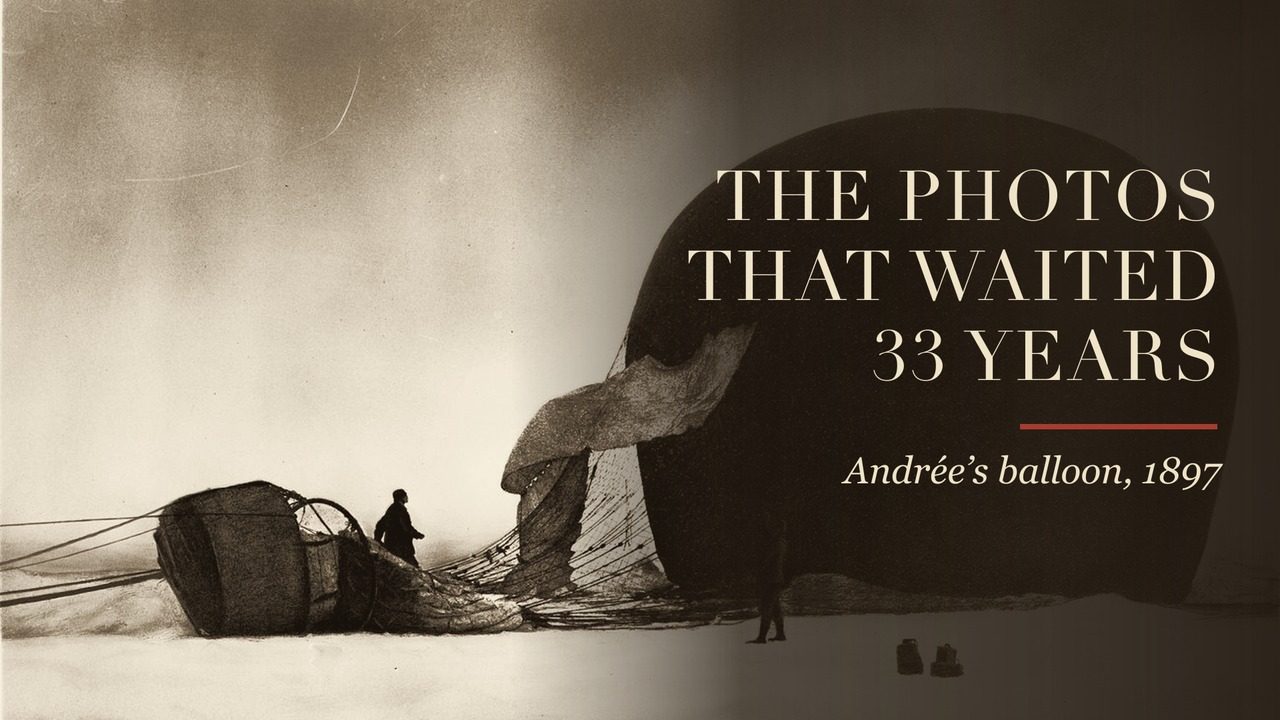
- Andrée's Balloon Expedition: https://youtu.be/oS-D0zTAv4A
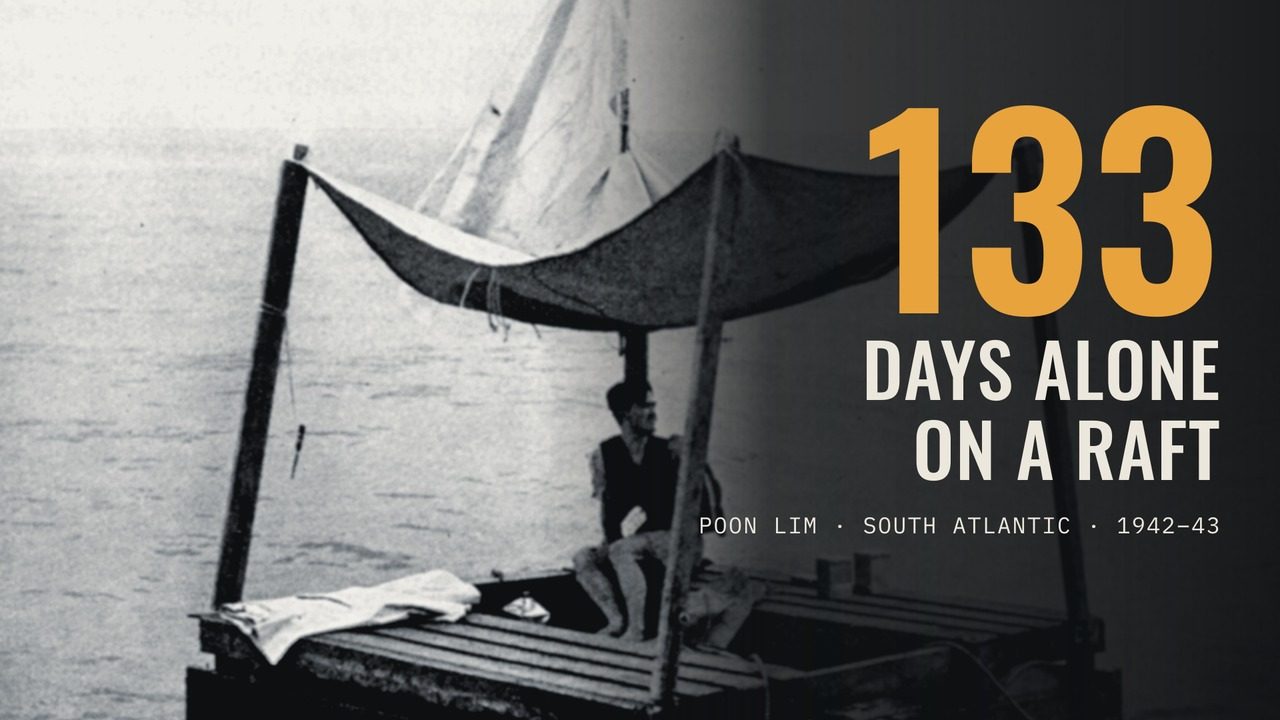
- Poon Lim: https://youtu.be/F3-PmgTQoO4
Related stories