The UN Still Can't Say How Its Leader Died — Hammarskjöld, 1961
Watch on YouTube Subscribe to Faded Pin
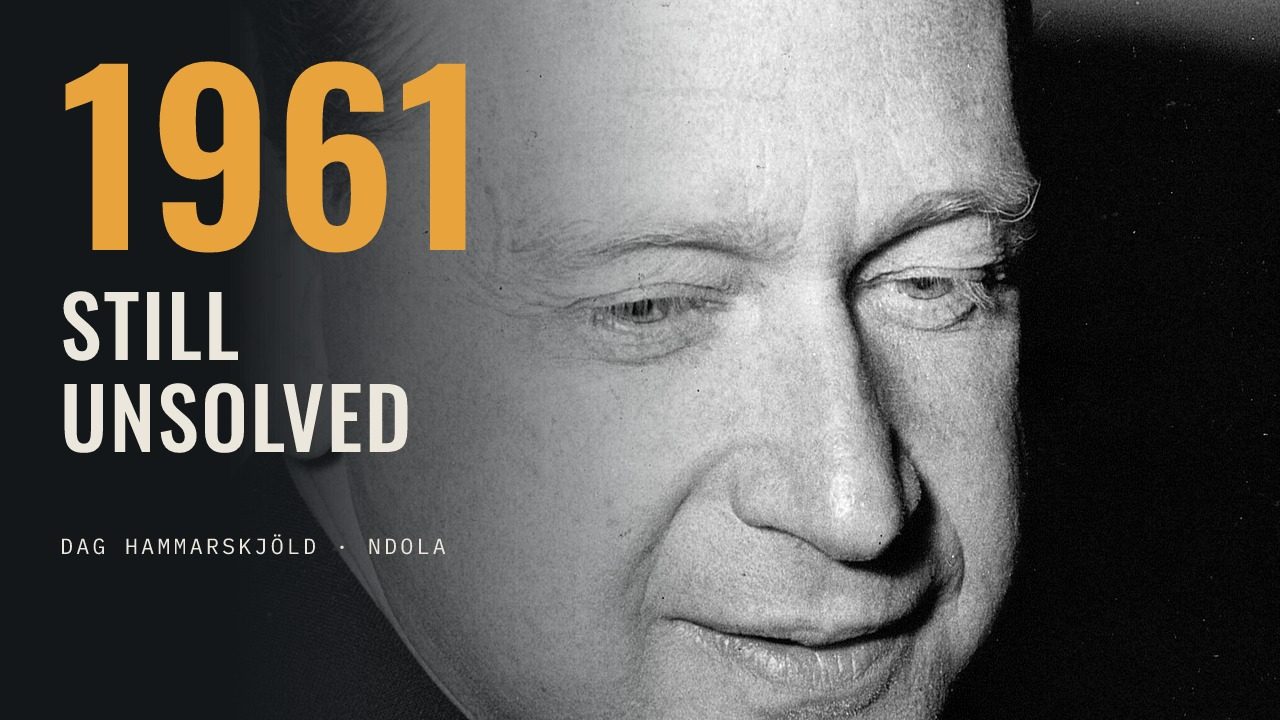
How did Dag Hammarskjöld die? On the night of 17–18 September 1961, the Swedish Secretary-General of the United Nations was flying to Ndola, in Northern Rhodesia (now Zambia), to negotiate a ceasefire in the Congo. His DC-6, with a Swedish crew, crashed a few miles from the airport; the wreck was not found until the next afternoon. The first inquiries blamed the pilots. Sixty years later, a UN-appointed judge found it "plausible that an external attack or threat may have been a cause of the crash" — and the UN says some governments still hold files that could answer the question. This is what the record says, and what it still doesn't.
▶ Full story, transcript and sources: https://fadedpin.vercel.app/stories/dag-hammarskjold-ndola-1961
På svenska
FN kan fortfarande inte säga hur Dag Hammarskjöld dog — Ndola 1961
Hur dog Dag Hammarskjöld? Natten mellan den 17 och 18 september 1961 var FN:s svenske generalsekreterare på väg till Ndola i Nordrhodesia (i dag Zambia) för att förhandla om vapenvila i Kongo. Hans DC-6, med svensk besättning, störtade en bit från flygplatsen, och vraket hittades först nästa eftermiddag. De första utredningarna gav piloterna skulden. Sextio år senare fann en FN-utsedd domare det "rimligt" att en yttre attack eller ett hot kan ha orsakat olyckan — och FN säger att vissa regeringar fortfarande håller inne med handlingar.
Chapters
- 0:00The last flight
- 0:59A Swede at the UN
- 1:48The peacekeeper
- 2:28The Congo
- 3:25The flight to Ndola
- 4:13The wreck
- 5:28The first answers
- 6:27The case reopens
- 7:33Still open
- 8:21Markings
The full story
Shortly after midnight, on the eighteenth of September, nineteen sixty-one, a Swedish airliner was coming in to land at Ndola, in what was then Northern Rhodesia, in southern Africa.
On board was the most important diplomat in the world: the Secretary-General of the United Nations, Dag Hammarskjöld, a Swede.
The plane never landed. Its wreckage was not found until the next afternoon, a few miles from the runway. Of the sixteen people on board, only one was still alive.
More than sixty years later, the United Nations is still investigating what happened that night. And it says some countries have still not opened their files.
Dag Hammarskjöld was born in nineteen oh five, in Jönköping, and grew up in the university town of Uppsala. His father, Hjalmar, had been Prime Minister of Sweden during the First World War.
Dag became an economist, and a senior civil servant: in the central bank, in the Ministry of Finance, and then in the Foreign Ministry. He was known as brilliant, private, and very hard to read.
In April nineteen fifty-three, at the age of forty-seven, he was chosen as Secretary-General of the United Nations. He was the youngest person ever to hold the post. Many of the great powers saw him as a quiet technocrat who would not cause them trouble.
They were wrong.
In nineteen fifty-six, during the Suez crisis, Hammarskjöld helped create something new: a United Nations Emergency Force, troops from neutral countries sent to keep the peace between armies. It was the beginning of what we now call peacekeeping.
He believed that the United Nations should not just be a place where great powers talked. It should be able to act, on behalf of the smaller countries that had no great power to protect them.
In nineteen sixty, the Belgian Congo became independent. Within days, the new country was falling apart. The army mutinied, Belgian troops returned, and the rich mining province of Katanga, led by Moïse Tshombe, declared that it was breaking away.
The United Nations sent in a large military and civilian operation. It was the biggest thing the organisation had ever done, and it put Hammarskjöld in the middle of the Cold War.
The Soviet Union accused him of siding with the West. Its leader, Nikita Khrushchev, demanded that he resign, and proposed that the Secretary-General be replaced by three people, one from the West, one from the Communist bloc, and one from the neutral countries. Hammarskjöld refused. In front of the General Assembly, he said he would stay, for the sake of the small nations.
In September nineteen sixty-one, fighting broke out between United Nations troops and the forces of Katanga. Hammarskjöld decided to fly to meet Tshombe himself, to try to arrange a ceasefire. The meeting was to be at Ndola, just across the border, in British-ruled Northern Rhodesia.
On the afternoon of the seventeenth of September, he took off from Léopoldville, the Congolese capital, in a DC-6 named Albertina, chartered from a Swedish airline, with a Swedish crew. There were sixteen people on board.
Close to midnight, the crew radioed the control tower at Ndola. They reported that they could see the lights of the airport. That was the last contact.
The plane did not land, and for hours, almost nothing was done. The airport manager assumed Hammarskjöld had changed his plans and flown somewhere else. A full search did not begin until morning.
In the early afternoon, the wreckage was found in the forest, a few miles from the airport. The plane had hit the trees, crashed, and burned. Fifteen people were dead. Dag Hammarskjöld was among them.
One man was still alive: Harold Julien, an American security officer for the UN. He was badly burned. He died several days later. Before he died, according to people who spoke with him, he talked of explosions before the crash. But their accounts of what he said did not agree.
A United Nations report later concluded that, if the rescue had come sooner, his chances of survival would have been far better.
The day after the crash, the former American President, Harry Truman, told reporters that Hammarskjöld had been on the point of getting something done when they killed him. He never explained what he meant.
The official inquiries were run by the authorities of Northern Rhodesia. They concluded that the plane had simply come in too low, and hit the trees. Pilot error. They found no evidence of a bomb, a missile, or a hijacking.
The United Nations held its own inquiry, in nineteen sixty-two. It could not determine the cause. It did not rule out an accident. It did not rule out sabotage, or an attack.
Later that year, Dag Hammarskjöld was awarded the Nobel Peace Prize. He is still the only person ever to receive it after his death. The American President, John F. Kennedy, called him the greatest statesman of our century.
For decades, the case stayed closed. Then, slowly, it began to open again.
Researchers found witnesses in Zambia, people who had lived near the crash site, who had never been asked what they saw. Some said they had seen a second, smaller aircraft in the sky that night, and a flash, or fire, before the crash.
In twenty seventeen, a report for the United Nations by the Tanzanian judge Mohamed Chande Othman concluded, in his words: "It appears plausible that an external attack or threat may have been a cause of the crash." Even a momentary distraction of the pilots, he wrote, for a matter of seconds, could have been enough. He found it almost certain that no one had been killed after the crash. And he said the burden of proof had now shifted to the governments that still held information.
In twenty nineteen, his next report found that British and Northern Rhodesian officials in nineteen sixty-one had tried to steer the original inquiries toward a finding of pilot error.
Not everyone agrees. An accident investigator working for an independent commission in twenty thirteen found that the airport's approach chart did not show a hill near the approach, and concluded that the plane had most likely flown into the ground by mistake.
In twenty twenty-four, the latest United Nations report said it remains plausible that an external attack or threat caused the crash. But it also said other explanations, sabotage, or a simple human error, remain possible. And it said that a handful of governments are still holding back information that could answer the question.
There are theories about who might have wanted Hammarskjöld dead, and why. None has been proven.
Dag Hammarskjöld was buried in Uppsala. After his death, his private diary was published in Sweden as Vägmärken, Markings. It showed a man almost nobody had known: lonely, deeply religious, and fully aware of the risks of his work.
What happened in the sky above Ndola, in the last minutes of the seventeenth of September, nineteen sixty-one, is still not known. The answer may already exist, in an archive somewhere, waiting for someone to open it.
Sources and credits
Sources
- United Nations, report of Judge Mohamed Chande Othman (2017) and UN News, "Plausible that 'attack or threat' led to crash that killed former UN chief Hammarskjöld" (25 October 2017)
- United Nations, Report of the Commission of Investigation (A/5069, 1962); later UN reports (2015, 2019, 2024)
- United Nations, "50th Anniversary of the Death of Dag Hammarskjöld"
- Wikipedia, "Dag Hammarskjöld" and "1961 Ndola Transair Sweden DC-6 crash" (and the sources cited there, incl. the Hammarskjöld Commission accident investigator's report, 2013)
Photographs
- Dag Hammarskjöld, 1961 — Nobel Foundation, public domain; Dag Hammarskjöld, 1950s — public domain; Per Björk and Dag Hammarskjöld, 1950s — SAS, public domain (Wikimedia Commons)
- Transair Sweden DC-6 (sister aircraft, not SE-BDY), 1965 — Lars Söderström, CC BY-SA 3.0
- Memorial at the crash site, Ndola, 2024 — "Jr the one", CC BY-SA 4.0
Related stories on Faded Pin:
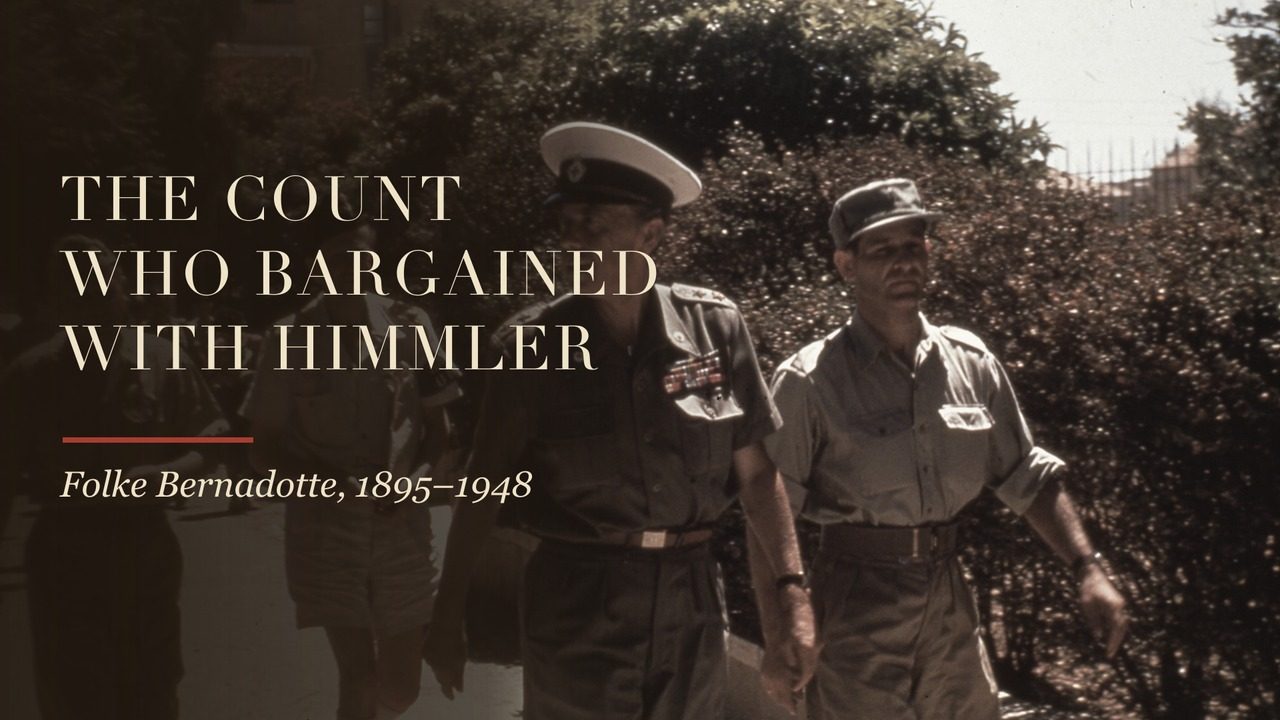
- Folke Bernadotte: https://youtu.be/Y1dZuuVdJ-E
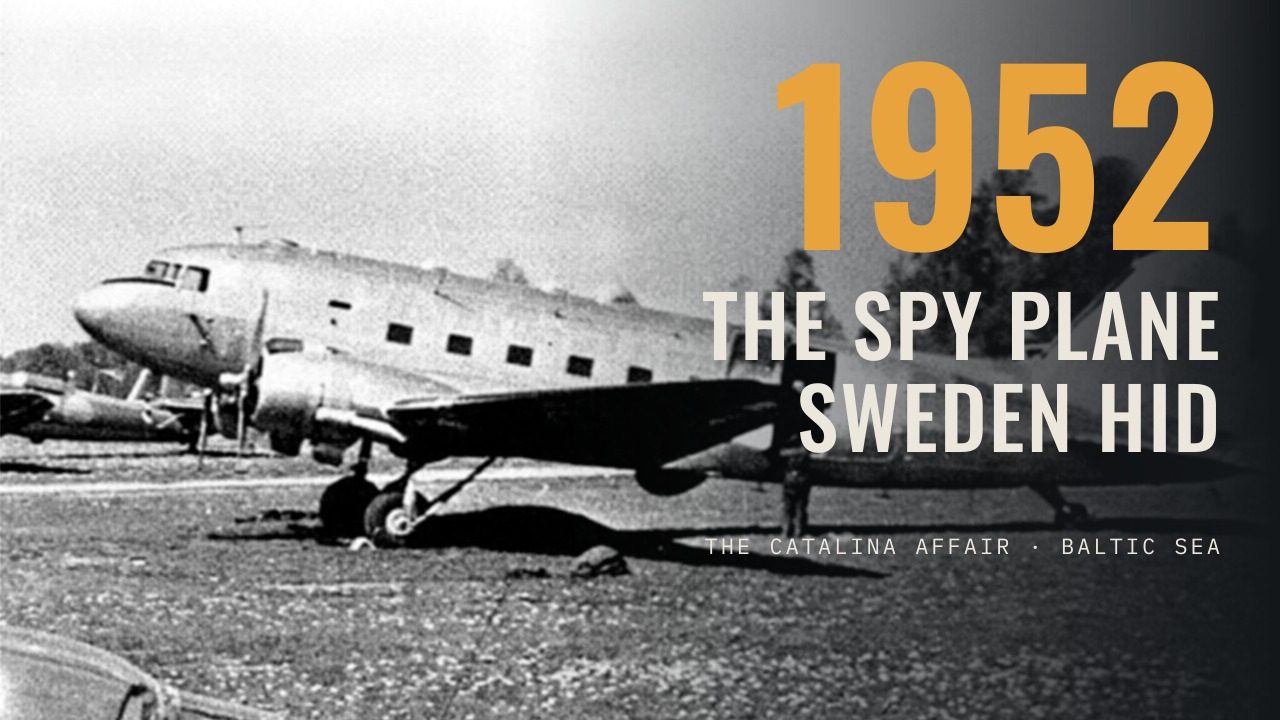
- The Catalina Affair: https://youtu.be/G5SFJw4qk_I
Related stories