Sweden's Ghost Rockets: 1,000 Sightings, No Answer (1946)
Watch on YouTube Subscribe to Faded Pin
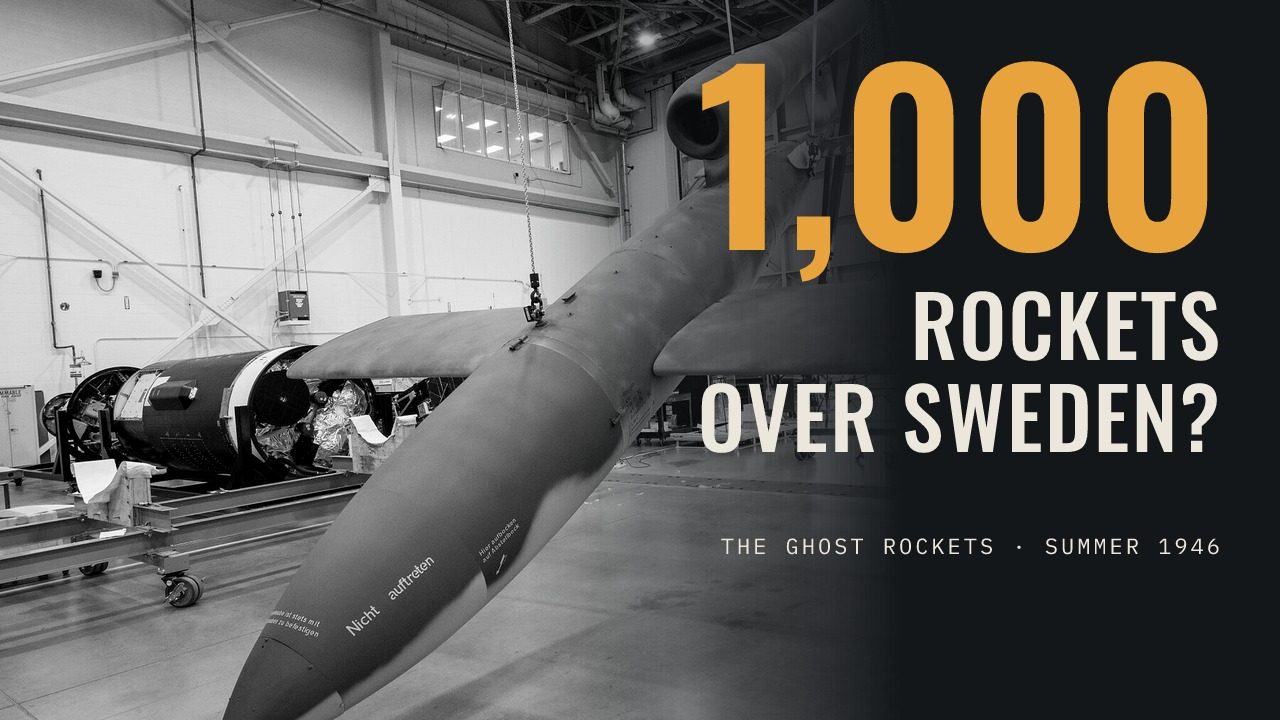
What were the ghost rockets of 1946? In the summer after the Second World War, people all over Sweden reported fast, cigar-shaped objects crossing the sky, some with a tail of fire, some falling into lakes. The newspapers called them spökraketer — ghost rockets. The Swedish military set up a special committee, collected nearly a thousand reports, searched Lake Kölmjärv for weeks, and asked the press to stop printing where the rockets were seen. Were they Soviet tests with captured German V-weapons from Peenemünde? Meteors? This is what the military's own files say — and what the ghost rockets changed in Sweden.
▶ Full story, transcript and sources: https://fadedpin.vercel.app/stories/ghost-rockets-sweden-1946
På svenska
Spökraketerna 1946: tusen observationer och inget svar
Vad var spökraketerna 1946? Sommaren efter andra världskriget rapporterade människor över hela Sverige snabba, cigarrformade föremål på himlen, några med en eldsvans, några som störtade i sjöar. Försvarsstaben tillsatte en särskild kommitté, samlade in nästan tusen rapporter, sökte i Kölmjärv i veckor och bad pressen att inte skriva var raketerna hade setts. Var det sovjetiska försök med tyska V-vapen från Peenemünde? Meteorer? Det här är vad militärens egna handlingar säger — och vad spökraketerna förändrade i Sverige.
Chapters
- 0:00Ghost rockets
- 0:55Why Sweden was afraid
- 1:38The first wave
- 2:25Lake Kölmjärv
- 3:25"Do not publish"
- 4:22The peak
- 5:11What were they?
- 6:13No answer
- 6:49What remains
The full story
In the summer of nineteen forty-six, people all over Sweden began to see things in the sky.
They described them as rockets. Long, fast, cigar-shaped objects, some with a tail of fire, crossing the sky in silence, or with a low rumble. Some seemed to fall into lakes.
The Swedish newspapers gave them a name: spökraketer. Ghost rockets.
Within weeks, the Swedish military had set up a special committee to find out what they were. It collected nearly a thousand reports. It searched lakes, studied radar, and examined every fragment people brought in. It never found the answer.
To understand why Sweden took the ghost rockets so seriously, you have to remember what had just happened.
The Second World War had ended only a year earlier. In its final months, Germany had fired thousands of rockets and flying bombs, the V-1 and the V-2, at Britain and Belgium. They were the most advanced weapons in the world.
Germany's main rocket test centre had been at Peenemünde, on the Baltic coast. By the end of the war it was in Soviet hands. And just across the Baltic Sea, neutral Sweden was beginning to wonder what the Soviet Union would do with what it had found there.
The first reports came from Finland, early in the year. In Sweden, the sightings began in earnest at the end of May.
By June, there were so many that the Defence Staff issued an order on how sightings should be reported: the time, the direction, the speed, the sound. And in July, according to the military's own files, now kept in the Swedish National Archives, a committee met for the first time, with officers and scientists from the air force, the navy, and the defence research institute. Its job was to investigate what it called space projectiles.
On the nineteenth of July, nineteen forty-six, in the far north of Sweden, people near a small lake called Kölmjärv saw something come down out of the sky and plunge into the water.
The military took it very seriously. An air force officer, Karl-Gösta Bartoll, was sent to lead a search. Divers went down into the lake. For weeks, they searched the bottom.
They found a crater in the mud. According to the National Archives, around three and a half thousand samples were taken from the lake bottom. Nothing was found in any of them. Not a piece of metal. Not a trace of fuel.
The same thing happened again and again. Objects were reported falling into lakes, or crashing in forests. People brought in pieces of what they thought were rockets. The defence research institute examined them. They turned out to be ordinary things, like slag, or coke.
By now, the sightings were not only a mystery. They were a security problem.
If someone was testing missiles over Sweden, then every newspaper report of where a rocket had been seen, and which way it was going, was useful information for whoever was firing them. So the Swedish military asked the newspapers to stop publishing the exact places and directions of the sightings.
In July, a man named Erik Reuterswärd took a photograph of a bright streak across the sky. It is one of very few pictures said to show a ghost rocket. What it shows, no one can say.
The wave peaked in August. On a single day, the eleventh of August, more than three hundred reports came in.
Inside the military, the main suspicion was the Soviet Union. Perhaps it was testing captured German rockets, from Peenemünde or somewhere else on the Baltic coast. Perhaps Sweden was being used as a test range, to see whether anyone would notice.
The interest spread far beyond Sweden. In August, the American general James Doolittle, famous for leading the first air raid on Tokyo, arrived in Stockholm. In September, similar sightings were reported in Greece, and then in Portugal and Belgium. For a few months, the ghost rockets were an international story.
And yet the evidence never came.
Not one fragment of a rocket was ever found. And there is no record of any rocket launch from Peenemünde after the war ended.
There is a simpler explanation for many of the sightings. Every year in August, the Earth passes through the Perseid meteor shower. The peak of the ghost rocket wave, on the ninth and the eleventh of August, came right in the middle of it. A bright meteor, a fireball, can look exactly like a rocket with a tail of fire, and pieces of meteors do fall to the ground.
But not every report fits. Many sightings happened in daylight, or far from any meteor shower. Some witnesses described objects that turned, or flew level and low. In October, the Defence Staff said publicly that most of the observations were vague, but that some clear ones could not be explained as natural phenomena, aircraft, or imagination.
Through the autumn, the sightings slowly faded. On the twelfth of December, nineteen forty-six, the committee held its last meeting. It had never found an explanation it could stand behind.
But the ghost rockets left something behind. According to the National Archives, the scare pushed Sweden to expand its radar surveillance, and its signals intelligence agency began listening to the Soviet Union and its allies. Long before the Cold War had a name, the summer of the ghost rockets had taught Sweden to watch the sky to the east.
Later, the ghost rockets were adopted by the world of flying saucers, and turned into something else entirely. But in nineteen forty-six, no one in Sweden was talking about visitors from space. They were afraid of something much closer.
Most of the ghost rockets were probably meteors, seen by people who had just lived through a war of rockets. Some of them, no one has ever explained.
And somewhere at the bottom of a small lake in the north of Sweden, there is still a crater in the mud, and no answer.
Sources and credits
Sources
- Riksarkivet (Swedish National Archives), "Spökraketer" — Krigsarkivet material on the Defence Staff's space projectile committee, 1946, and the Arkivpodden episode on the ghost rockets
- Wikipedia, "Ghost rockets" (and the sources cited there)
- Amusing Planet, "The Ghost Rockets of Scandinavia" (2026)
Photographs
- "Ghost rocket", photographed by Erik Reuterswärd, 9 July 1946 — public domain (Wikimedia Commons)
- Search at Lake Kölmjärv, July 1946 — public domain (Wikimedia Commons)
- Peenemünde, RAF reconnaissance photograph, June 1943 (IWM C 4782) — public domain
- V-1 flying bomb, museum photograph — CC0; General James Doolittle — public domain (US Air Force); Perseid meteor, NASA 2021 — public domain; USAF Europe document, 4 November 1948 — public domain
Related stories on Faded Pin:
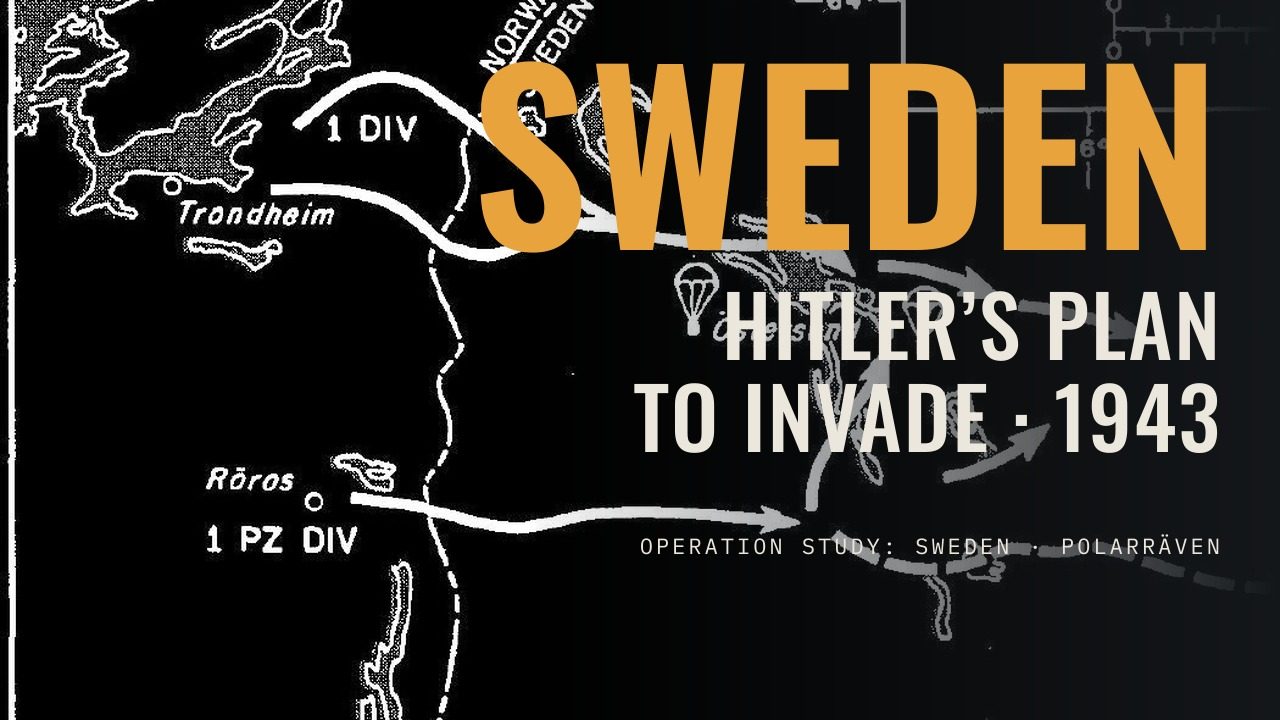
- Why Didn't Hitler Invade Sweden? The Secret 1943 Plan: https://youtu.be/okFoMToNdic
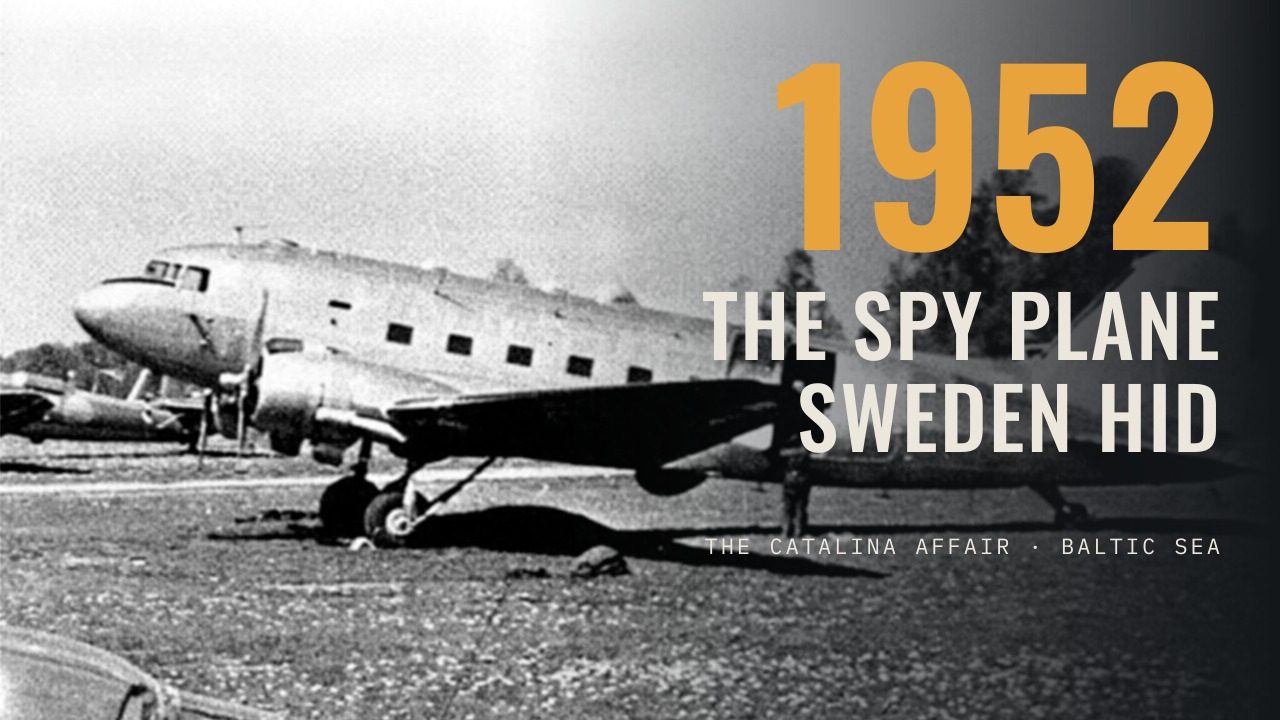
- The Catalina Affair: https://youtu.be/G5SFJw4qk_I
Related stories