Folke Bernadotte: The Count Who Bargained With Himmler — and Was Shot for Seeking Peace
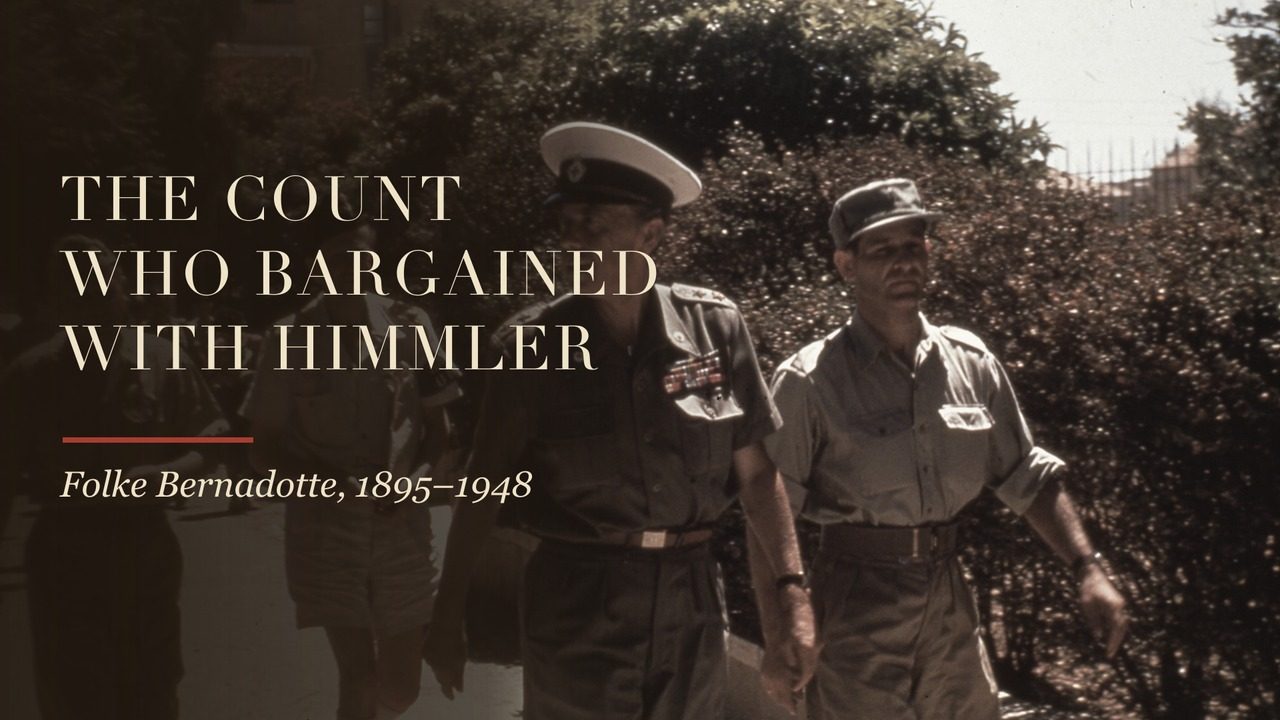
Watch on YouTube Subscribe to Faded Pin
In the spring of 1945, Swedish Count Folke Bernadotte drove into collapsing Nazi Germany, bargained with Heinrich Himmler, and brought thousands of prisoners out of the concentration camps in the White Buses (Vita bussarna). Three years later he became the first mediator in the history of the United Nations — and on 17 September 1948 he was assassinated in Jerusalem.
▶ Full story, transcript and sources: https://fadedpin.vercel.app/stories/folke-bernadotte-white-buses-assassination
This is the story of the rescue, the controversy around it, his peace plan, and the men who killed him.
Content note: discusses the Holocaust and a political assassination. No graphic imagery.
På svenska
Folke Bernadotte: Greven som förhandlade med Himmler – och sköts för freden
Folke Bernadotte räddade tusentals fångar ur nazisternas koncentrationsläger med de Vita bussarna 1945 och blev FN:s första medlare. Den 17 september 1948 sköts han ihjäl i Jerusalem. Det här är hans sanna historia (på engelska, med engelska undertexter).
Chapters
- 0:00Jerusalem, September 1948
- 0:50A count, not a prince
- 1:39Into the Third Reich
- 2:32The White Buses
- 3:30Himmler's offer
- 4:15Not a simple story
- 4:58Palestine, 1948
- 6:1417 September 1948
- 7:33Resolution 194 and legacy
The full story
On the afternoon of September 17th, 1948, a small convoy of United Nations cars drove through Jerusalem.
In one of them sat a Swedish count. Three years earlier, he had travelled into Nazi Germany, sat across the table from Heinrich Himmler, and brought thousands of prisoners out of the concentration camps alive.
Now he was the first peace mediator in the history of the United Nations.
Shortly after five o'clock, a jeep blocked the road. Men in uniform got out. One of them walked up to his car, pushed a gun through the window, and opened fire.
His name was Folke Bernadotte. This is how he came to be in that car — and why he was killed.
Folke Bernadotte was born in Stockholm on January 2nd, 1895, into the Swedish royal family. His father, Prince Oscar, had given up his royal rights to marry a woman who was not of royal birth. So Folke grew up a count, not a prince. The king, Gustaf the Fifth, was his uncle.
He became a cavalry officer. In 1928, in New York, he married an American, Estelle Manville, the daughter of a wealthy industrial family.
For most of his life, nothing about him suggested that he would make history. He led Sweden's Boy Scouts. And in 1943, in the middle of the Second World War, he became vice chairman of the Swedish Red Cross.
That job was about to take him into the heart of the Third Reich.
By early 1945, Nazi Germany was collapsing. In its camps were thousands of prisoners from Norway and Denmark — and in Scandinavia, people feared that none of them would survive the regime's final weeks.
Sweden was neutral. And neutrality gave it something rare: a way in.
In February 1945, Bernadotte travelled to Germany to meet the one man who could open the camp gates: Heinrich Himmler, head of the SS, and one of the chief architects of the Holocaust.
The first deal was narrow. The Scandinavian prisoners could be gathered in one camp, Neuengamme, near Hamburg, where the Swedes could care for them.
In March, a Swedish convoy rolled into Germany. Buses, ambulances and trucks, all painted white, with red crosses on the roofs, so that Allied pilots would not attack them. They became known as the White Buses.
They drove through a country being bombed day and night, collecting prisoners from camp after camp.
As Germany fell apart, the deal grew. In late April, the convoy reached Ravensbrück, the women's camp north of Berlin, and began bringing out women of many nationalities — Polish, French, Belgian and Dutch.
By the time Germany surrendered, the Swedish Red Cross had brought out fifteen thousand, three hundred and forty-five prisoners. Several thousand of them were Jewish. Transports continued after the war, and counting those, the total is usually put at more than twenty thousand.
On the night of April 23rd, 1945, Bernadotte met Himmler one last time, at the Swedish consulate in Lübeck.
Himmler told him that Hitler would soon be dead. Then he made an offer. Germany would surrender to Britain and the United States — but keep fighting the Soviet Union.
Bernadotte passed the offer on. Churchill and Truman rejected it: the surrender had to be unconditional, and to all the Allies. A week later, Hitler was dead. Eight days after that, the war in Europe was over.
That same year, Bernadotte published his account of those months. In English, it was called The Curtain Falls.
The rescue made him famous across Europe. But it has never been a simple story.
From the start, Scandinavian prisoners came first. And to make room for them at Neuengamme, around two thousand other prisoners — French, Polish and Russian — were moved out to other camps. Many of them died.
Critics have argued about this ever since. Bernadotte's defenders answer that without that first, narrow deal, no one might have been saved at all. Both things can be true.
Three years later, Bernadotte was called to another war.
In May 1948, the British left Palestine. On May 14th, Israel declared its independence. The next day, the armies of neighbouring Arab states invaded, and the fighting spread.
The United Nations decided to appoint a mediator — the first in its history. On May 20th, the five permanent members of the Security Council chose him, unanimously: Folke Bernadotte.
Within weeks, he negotiated a truce. It began on June 11th, and lasted about four weeks.
He also saw what the war was doing to ordinary people. Hundreds of thousands of Palestinian Arabs had fled or been driven from their homes. Bernadotte pushed for urgent relief, and insisted that they had a right to go back.
His first proposals, that summer, satisfied no one. He kept working. On September 16th, 1948, he finished a new report. It proposed new borders, Jerusalem under United Nations control, and the right of refugees to return to their homes.
The next day, he drove into Jerusalem.
It was a little after five in the afternoon. In the Katamon neighbourhood, a jeep pulled across the road in front of the UN cars. Four men got out. One of them, Yehoshua Cohen, ran to Bernadotte's car, pushed a submachine gun through the window, and fired.
Bernadotte was killed. So was the man sitting next to him — a French officer and UN observer, Colonel André Sérot.
The killers belonged to Lehi, a Jewish underground group the British had called the Stern Gang. Lehi saw Bernadotte's plans as a threat to the state it wanted. The order came from its leadership. Among the leaders behind it, according to later accounts, was Yitzhak Shamir — who decades later would become prime minister of Israel.
Israel's government cracked down on the group, arrested many of its members, and Lehi was soon dissolved. But no one was ever charged with the murder.
The man who had bargained with Himmler and brought thousands of people out of the camps was killed, in the end, not by the Nazis — but by extremists from one of the peoples he had tried to help.
His report was published three days after his death.
Three months later, the UN General Assembly adopted Resolution 194. It took up the principle he had insisted on: refugees who wished to return to their homes and live at peace with their neighbours should be allowed to do so.
For decades, his murder cast a shadow over relations between Sweden and Israel. In 1995, Israel's foreign minister, Shimon Peres, publicly expressed regret that Bernadotte had been killed — and thanked him for the Jews he had rescued.
Today, Sweden's government agency for peace and security carries his name: the Folke Bernadotte Academy.
He was not a saint, and he was not a simple hero. He made deals with one of the worst men of the century, and he chose who would be saved first. He tried to make peace where neither side wanted to give ground.
He brought thousands of people home alive. And he died trying to stop a war.
Sources and credits
Sources
- Swedish Red Cross figures on the White Buses (via "White Buses", Wikipedia; Swedish Holocaust Museum)
- United Nations (UNISPAL): appointment of the UN Mediator; Israeli report on the assassination investigation, 1949
- Jewish Virtual Library, "The Assassination of Count Bernadotte"
- peacelab.org, "Folke Bernadotte (1895–1948)"
- Folke Bernadotte Academy (fba.se)
- US Army official history, "The Supreme Command" (Lübeck meeting, 23 April 1945)
- Benny Morris, The Birth of the Palestinian Refugee Problem Revisited (Resolution 194)
- Wikipedia (English/Swedish): Folke Bernadotte; White Buses; Neuengamme; Israel–Sweden relations
Archive film
- Universal Newsreel, "Air Smashes Devastate Germany" (March 1945) and "Beaten Nazis Sign Historic Surrender" (May 1945) — public domain, via Internet Archive
Photos
- Nationaal Archief / Anefo (Ben Merk and others), 1948 — CC0
- National Library of Israel: Moshe Marlin Levin, Benno Rothenberg (1948) — CC BY 4.0
- IPPA / National Library of Israel (Shimon Peres) — CC BY 4.0
- Thure Christiansson (1943) — attribution
- Swedish Railway Museum (1943) — CC0
- Willem van de Poll / Nationaal Archief (Jerusalem, 1948–49) — CC0
- Swedish, Danish and US archival photographs (1928–1948), Israeli GPO and State of Israel documents (1948), British Ministry of Defence aerial photograph (1945), US Army Signal Corps, UK Central Office of Information — public domain
- Maps: Faded Pin · Natural Earth
Related stories on Faded Pin:
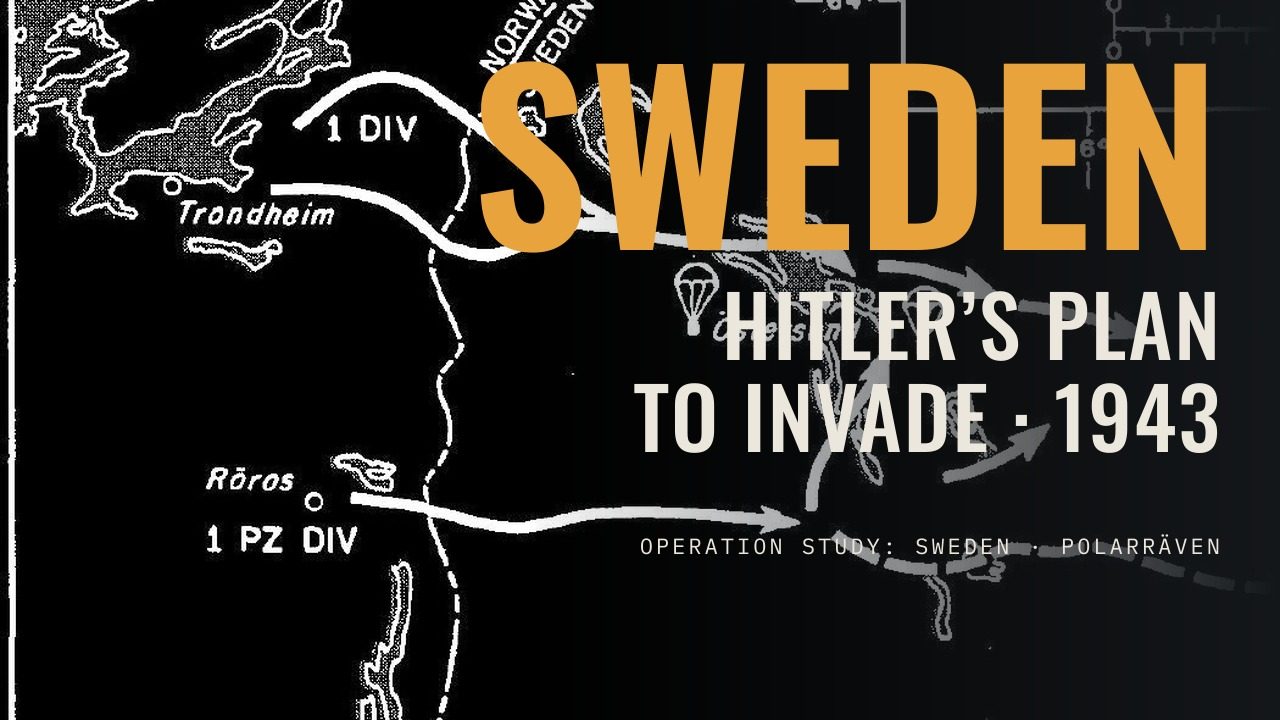
- Why Didn't Hitler Invade Sweden? The Secret 1943 Plan: https://youtu.be/okFoMToNdic
- The True Story Behind "Stockholm Syndrome" (Norrmalmstorg 1973): https://youtu.be/bcOC1jV5Ctw
Related stories