The "Spy Whale" That Chose People — Hvaldimir, Norway
Watch on YouTube Subscribe to Faded Pin
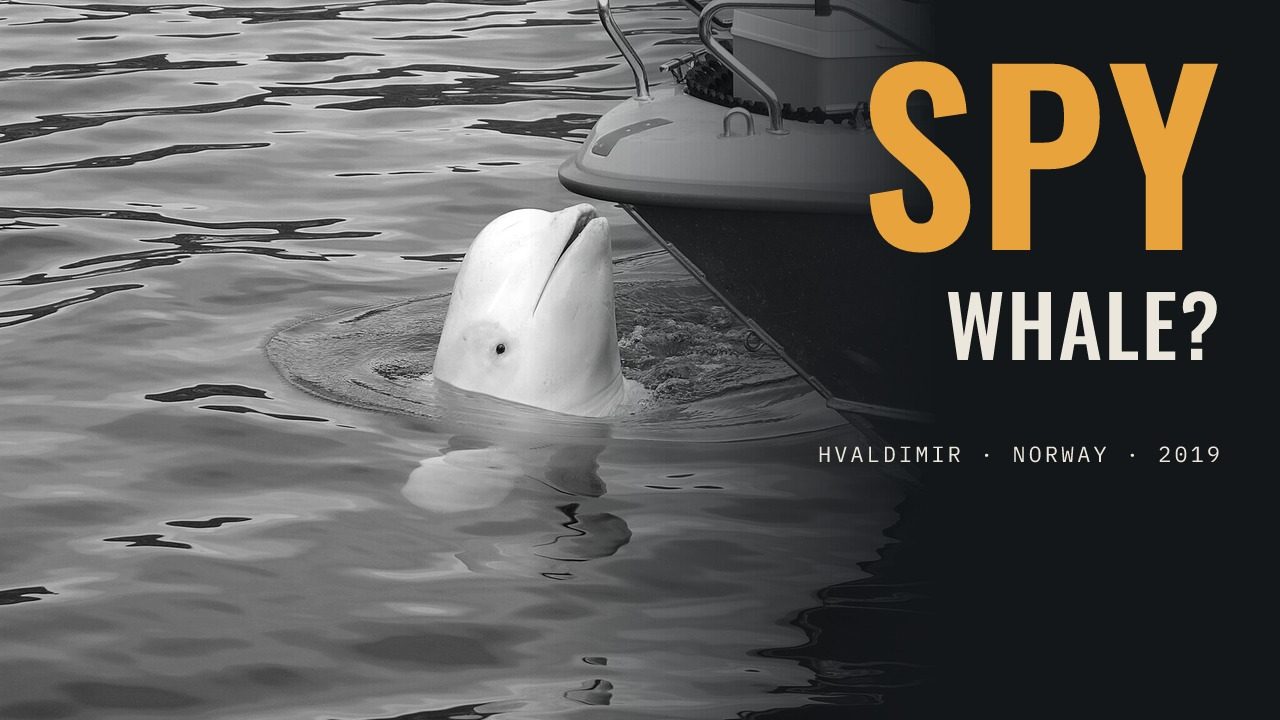
Was Hvaldimir really a Russian spy whale? In April 2019, a tame beluga swam up to fishermen off Finnmark in northern Norway wearing a tight harness with a camera mount — and the words "Equipment St. Petersburg" on the buckle. Norway named him Hvaldimir. For five years he lived alongside people, from the harbour of Hammerfest to the coast of Sweden, until he was found dead near Stavanger in 2024. This is what is known about the "spy whale", what is not, and what the police found after his death.
▶ Full story, transcript and sources: https://fadedpin.vercel.app/stories/hvaldimir-russian-spy-whale-norway
Chapters
- 0:00The whale in the harness
- 0:42A tame whale
- 1:18The "spy whale"
- 2:06Russia's answer
- 2:52Hammerfest
- 3:35South to Sweden
- 4:23Found dead
- 5:12What we know
The full story
At the end of April, twenty nineteen, fishermen working off the coast of northern Norway noticed something strange. A white whale was swimming up to their boat, again and again, as if it wanted their attention.
It was a beluga. And around its body, it wore a tight harness, with straps and buckles, and a mount for a camera.
On one of the buckles, there were three words in English: Equipment, Saint Petersburg.
The fishermen called the authorities. One of them pulled on a survival suit, got into the cold water, and worked at the buckles until the harness came free.
The whale did not swim away. It stayed close to the boats and the people, rolling on its side, nudging, playing. It behaved like an animal that had spent its life around humans.
That was the first mystery. Belugas are Arctic whales. They live in groups, and wild ones keep their distance. This one seemed to have no group at all, and to be looking for people.
The second mystery was the harness itself.
The coast where he appeared is not far from the Russian border, and from Murmansk, home of Russia's Northern Fleet. Within days, newspapers around the world were calling him the Russian spy whale.
The Norwegians gave him a name. In Norwegian, the word for whale is hval. Put it together with Vladimir, and you get Hvaldimir.
Navies have trained marine animals before. The United States has used dolphins and sea lions to find mines and guard harbours, and the Soviet Union had programmes of its own. Satellite images later showed pens at a Russian naval base in the region that could hold whales like him.
Russia never officially explained Hvaldimir. A retired Russian colonel told a radio station that if Russia were using a whale for spying, it would hardly put a label on it saying where it came from. But he did not deny that the whale might have escaped from the navy.
Others had different ideas. Some said he might have come from a research project. A former Norwegian diplomat suggested he could have been a therapy animal, used with children.
No one has ever proven what Hvaldimir was trained to do.
What is known is what he did next. He moved into the harbour of the town of Hammerfest, and he became its most famous resident.
He followed boats in and out. He played with ropes and balls. When a woman dropped her phone into the harbour, he dived down and brought it back up to her. People came from all over the world to see him.
But the friendliness was a danger too. He was hit by propellers and hooked by fishing lines. And because he had probably been fed by people all his life, he did not seem to know how to hunt on his own. He grew thin. The Norwegian authorities, and volunteers, arranged for him to be fed.
Then, in twenty twenty-three, Hvaldimir began to travel.
He swam south, all the way down the long coast of Norway, and then across into Swedish waters. He was seen off the fishing villages of the Bohuslän coast, at Hunnebostrand, and further along the coast, before he turned back toward Norway.
No one knows why he made the journey. Some thought he was looking for other belugas. Wild belugas do not live that far south.
On the thirty-first of August, twenty twenty-four, Hvaldimir was found floating dead in a bay near Stavanger, in southern Norway.
Two animal rights groups went to the police. They said he had been shot, and demanded an investigation.
The police had the body examined. A few weeks later, they announced the result. There was no sign that he had been shot. X-rays found no bullets. Most of the marks on his skin were superficial. But lodged in his mouth, they found a stick, about thirty-five centimetres long. The most likely cause of death, the police said, was a bacterial infection, from the wounds the stick had caused.
The groups did not accept the conclusion. The police did not change it.
So the Russian spy whale died, in the end, not in some secret operation, but from a stick he had probably picked up while playing, the way he had played with ropes, and balls, and phones, all his life.
We still do not know where he came from, who put the harness on him, or what it was for. What we know is that, for five years, a lonely white whale chose the company of people, along the coasts of Norway and Sweden. And people, for the most part, chose him back.
Sources and credits
Sources
- Wikipedia, "Hvaldimir" (and the sources cited there: NRK, VG, The Guardian, BBC and others)
- Associated Press, reporting on the Norwegian police findings, September–October 2024 (via Arctic Today, CBS News, Stars and Stripes)
Photographs
- Hvaldimir in Hammerfest harbour, 17 June 2019 (three photos) — Ein Dahmer, CC BY-SA 4.0 (Wikimedia Commons)
- Hammerfest harbour, 2015 — JoachimKohler-HB, CC BY-SA 4.0
Related stories on Faded Pin:
- Whiskey on the Rocks: https://youtu.be/0bQj8mZV8sI
- Sweden's Ghost Rockets: https://youtu.be/iuejvqD8Xbc
Related stories