Did America Really Panic? The War of the Worlds Broadcast, 1938
Watch on YouTube Subscribe to Faded Pin
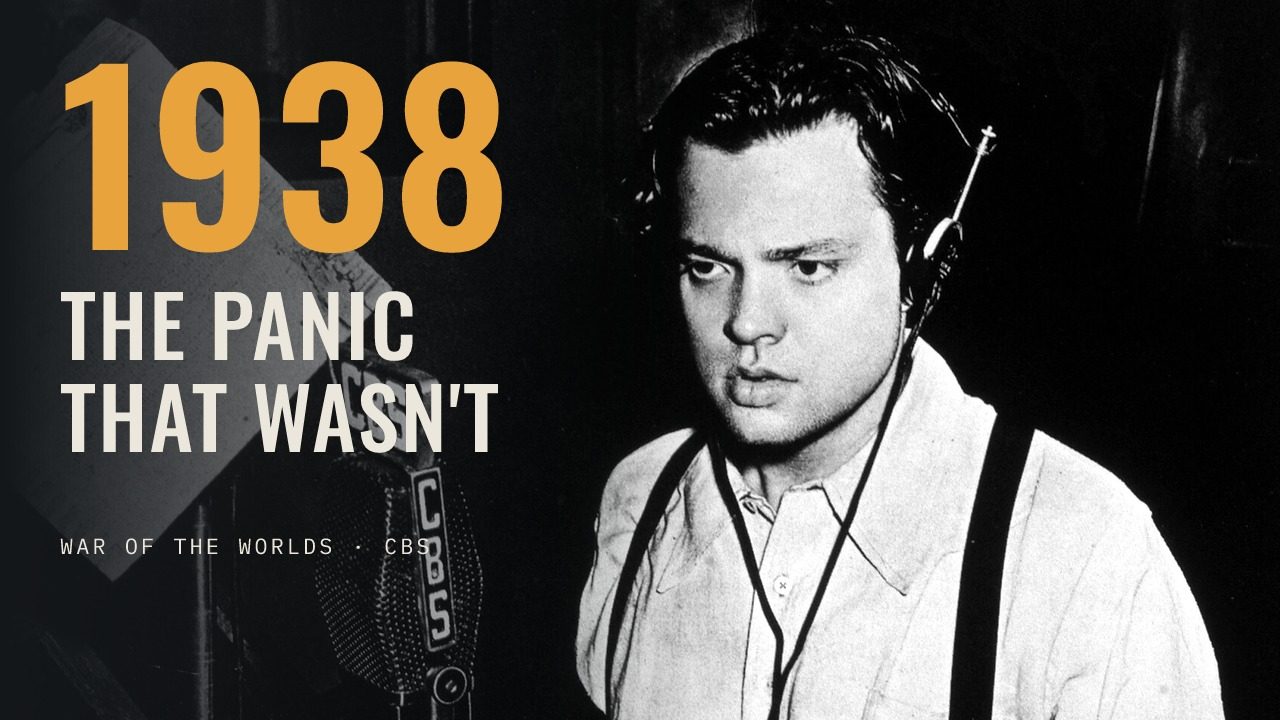
The War of the Worlds radio broadcast of 30 October 1938 is famous for causing a nationwide panic: Orson Welles and the Mercury Theatre told H. G. Wells's Martian invasion as live news on CBS, and the next morning newspapers across America reported terror from coast to coast. But when historians checked, the story fell apart. A ratings survey that night found only about 2 per cent of households listening. The most dramatic reports could not be confirmed. And the newspapers that spread the panic story had their own reasons to attack radio. This is the true story of the broadcast — and of the legend that grew around it.
▶ Full story, transcript and sources: https://fadedpin.vercel.app/stories/war-of-the-worlds-1938-panic-myth
Chapters
- 0:00Martians in New Jersey
- 0:59The show
- 1:46The broadcast
- 2:52The headlines
- 3:36Who was listening?
- 4:56Newspapers vs radio
- 5:53What really happened
- 6:27After
- 7:07The panic that wasn't
The full story
On the evening of the thirtieth of October, nineteen thirty-eight, Martians landed in a small town in New Jersey.
At least, that is what millions of Americans were supposed to have believed. The next morning, newspapers across the United States reported that a radio play had caused a wave of terror.
It became one of the most famous stories in the history of the media. It is still told today, as a warning about the power of broadcasting, and about how easily people can be fooled.
But when historians went back and checked, they found something strange. The biggest panic of that night may not have happened in people's homes. It may have happened in the newspapers.
In nineteen thirty-eight, radio was the new, exciting medium in America.
One of the young stars of radio and the stage was Orson Welles. He was just twenty-three years old. With his company, the Mercury Theatre, he presented a drama every Sunday evening on the CBS network.
For the night before Halloween, Welles and his writer, Howard Koch, chose an old science-fiction novel: The War of the Worlds, by the English writer H. G. Wells, about an invasion of Earth from Mars.
They did something new with it. Instead of telling the story in the normal way, they told it as if it were happening live, on the radio, in the form of news.
The programme began at eight o'clock in the evening, Eastern time. It started with an announcement that this was a play, the Mercury Theatre presenting The War of the Worlds.
Then came what sounded like an ordinary evening of dance music. Soon the music was interrupted by a news bulletin: astronomers had seen explosions on the planet Mars. Then another interruption. A strange object had fallen on a farm near a village called Grovers Mill, in New Jersey.
The bulletins came faster. A reporter at the scene described a creature coming out of the object. Then the reporter's voice was cut off. Soldiers were sent in. They were wiped out. The invaders were moving toward New York.
For listeners who had tuned in late, and missed the announcement at the start, it could sound alarmingly real.
The next morning, the story was on front pages across the country. According to the newspapers, a radio play had caused panic from coast to coast. They reported terrified listeners, people fleeing their homes, and hospitals treating people for shock.
That same day, Orson Welles had to face a room full of reporters, and answer their questions about what he had done.
There were calls for controls on radio. A senator proposed that broadcasts should be checked by the government before they went on the air.
The story of the night America panicked had begun. And for decades, almost nobody questioned it.
The first problem is a simple one: how many people were actually listening?
On the night of the broadcast, a ratings company, the C. E. Hooper company, telephoned about five thousand households across the country, and asked what they were listening to. Only about two per cent said they were listening to the Orson Welles play. Most people were listening to something else, especially a much more popular comedy show on a rival network.
Later, a researcher, Hadley Cantril, wrote a famous study of the broadcast. He estimated that about six million people had heard it, and more than a million had been frightened. Those numbers are still quoted today.
But historians have pointed out problems with his method. His estimate of the audience was far higher than any other at the time. His interviews, as he himself admitted, were not a representative sample. And he counted people who had been excited, or disturbed, as part of the panic.
The second problem is the newspapers themselves.
In the nineteen-thirties, newspapers and radio were bitter rivals. Radio was taking a growing share of the advertising money that newspapers depended on. The War of the Worlds broadcast gave the newspapers a perfect story: proof that radio was irresponsible, and dangerous.
When media historians Jefferson Pooley and Michael Socolow examined the reports, they found that the news agency reports of the following days relied overwhelmingly on anonymous, unconfirmed anecdotes. Claims of people treated in hospitals for shock could not be confirmed. And no suicide connected to the broadcast was ever verified.
In twenty thirteen, they summed up their conclusion in a short sentence: "Almost nobody was fooled."
That does not mean nothing happened at all.
Some people were genuinely frightened. According to the historian A. Brad Schwartz, who studied nearly two thousand letters sent to Welles and to the American broadcasting regulator after the show, around a quarter of them came from people who had been frightened, or had seen others frightened.
But a scattering of frightened listeners is a very different thing from a nation in panic. And there is little evidence of a nationwide panic.
In the end, there were no new laws. The government's broadcasting regulator took no action against Welles or CBS. One listener sued the network, and the case was quickly dismissed.
For Orson Welles, the night was a turning point. Overnight, he became famous across America. Three years later, he made his first feature film, Citizen Kane.
And the broadcast itself became a classic. In two thousand and three, it was added to the National Recording Registry of the United States Library of Congress, as a recording of lasting importance.
The War of the Worlds is still told as a story about how easily a new medium can fool its audience.
But the closer you look, the more it becomes a different story. A story about how one medium used a frightening night to tell the public a frightening story about its rival. And about how a good story, told often enough, can become history, whether it happened that way or not.
Sources and credits
Sources
- Jefferson Pooley & Michael Socolow, "The Myth of the War of the Worlds Panic", Slate, 28 October 2013
- Michael Socolow, The Chronicle of Higher Education (2008), via Paleofuture, "Did the War of the Worlds Radio Broadcast Really Cause Mass Panic?" (2019)
- Snopes, "Did the 1938 Radio Broadcast of 'War of the Worlds' Cause a Nationwide Panic?"
- Wikipedia, "The War of the Worlds (1938 radio drama)" and "The Press–Radio War" (and the sources cited there, incl. historians A. Brad Schwartz and W. Joseph Campbell)
- Hadley Cantril, The Invasion from Mars (1940)
Photographs
- Orson Welles and The Mercury Theatre on the Air, 1938 — public domain (Wikimedia Commons)
- Orson Welles's press conference and Universal Newsreel, 31 October 1938 — public domain
Related stories on Faded Pin:
- Annie Edson Taylor: https://youtu.be/J89KI2eSdGQ
- The Pilot Who Fell Through a Thunderstorm: https://youtu.be/VppoRULusbc
Related stories